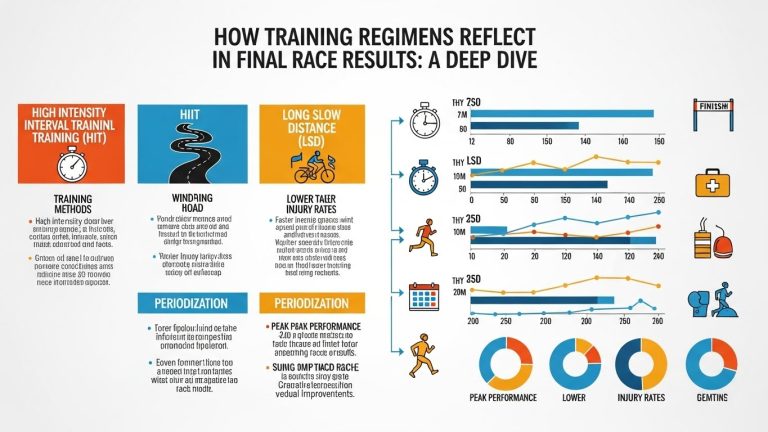

How Training Regimens Reflect in Final Race Results: A Deep Dive
In the world of competitive racing, whether it be on foot, bike, or in the water, the training regimen of an athlete plays a crucial role in determining the final race results. The intricate balance of endurance, speed, strength, and mental fortitude is honed through meticulously planned training schedules. This blog post explores how these regimens translate to performance on race day, shedding light on the science behind training and its visible impact on the outcome of races.
The Science of Training Regimens
Training regimens are scientifically designed programs that prepare athletes for the physical and mental demands of their sport. These regimens are based on the principles of exercise physiology, which focus on improving cardiovascular endurance, muscular strength, and flexibility. The study of exercise physiology provides insights into how the body adapts to different types of physical stress, allowing trainers to develop effective programs tailored to each athlete’s needs.
An athlete’s training program typically includes a mix of aerobic and anaerobic exercises. Aerobic exercises, such as long-distance running or cycling, improve cardiovascular endurance and are crucial for maintaining pace throughout a race. Anaerobic exercises, such as interval training and weightlifting, build strength and speed, helping athletes to perform explosive movements during crucial moments of the race.
Periodization: The Backbone of Effective Training
One of the key concepts in training regimens is periodization, which involves dividing the training program into distinct phases. Each phase has specific goals and focuses on different aspects of performance. Periodization helps athletes peak at the right time, ensuring they are in peak physical condition for their races.

Typically, a training cycle may include the following phases:
- Base Phase: This phase focuses on building a strong aerobic foundation. Athletes engage in long, steady workouts to improve their cardiovascular fitness and endurance.
- Build Phase: Intensity and volume increase in this phase, incorporating interval training and strength exercises to enhance speed and power.
- Taper Phase: In the final weeks before a race, training volume is reduced to allow the body to recover and adapt to the accumulated training stress. This phase is crucial for ensuring the athlete is well-rested and ready for peak performance.
The strategic application of periodization optimizes performance and reduces the risk of injury, a critical consideration for athletes aiming to excel in competitive races.
Nutrition and Recovery: Essential Components
No training regimen is complete without attention to nutrition and recovery. A well-balanced diet provides the necessary fuel for training and recovery, while adequate rest allows the body to repair and strengthen itself.
Athletes need to consume a diet rich in carbohydrates, proteins, and fats to support their training demands. Carbohydrates are vital for replenishing glycogen stores, while proteins aid in muscle repair and growth. Healthy fats are essential for overall energy balance and hormone production.
Recovery strategies, such as sleep, hydration, and active recovery sessions, play a pivotal role in ensuring athletes are ready for their next training session. Research on athletic recovery highlights the importance of sleep in facilitating physical and mental restoration, making it an indispensable aspect of any training regimen.
The Psychological Edge: Mental Training
Beyond physical preparation, mental training is a critical component of an athlete’s regimen. The mental demands of a race can be as challenging as the physical ones, requiring athletes to develop focus, resilience, and the ability to manage stress.
Mental training techniques, such as visualization, goal setting, and mindfulness, help athletes build the psychological resilience needed to excel under pressure. Visualization involves mentally rehearsing the race, which can improve confidence and performance. Goal setting provides motivation and a clear roadmap for training, while mindfulness helps athletes stay present and focused during competition.
According to studies on visualization, athletes who regularly practice mental training techniques often perform better and recover more quickly from setbacks, underscoring the importance of psychological preparation in achieving race day success.
Case Studies: Training Regimens in Action
Real-world examples illustrate how training regimens impact race results. Consider the case of elite marathon runners, whose training programs are meticulously structured to maximize endurance and speed. These athletes often follow a strict schedule of long runs, speed work, and cross-training, allowing them to build the stamina and speed necessary to excel in marathons.
Similarly, professional cyclists adopt regimens that include hill repeats, time trials, and endurance rides to prepare for the varied demands of road races. The combination of terrain-specific training and conditioning exercises enables cyclists to tackle climbs, sprints, and long distances with equal proficiency.
In the realm of triathlons, athletes must balance training for three disciplines: swimming, cycling, and running. Triathletes’ regimens are designed to enhance their performance across these disciplines, with workouts tailored to improve transitions and endurance.
The success of athletes like Eliud Kipchoge in marathons or Chris Froome in cycling showcases how well-crafted training regimens can lead to remarkable race performances. These athletes exemplify the synergy between dedicated training, nutrition, recovery, and mental preparation.
Conclusion: The Road to Race Day Success
Training regimens are the cornerstone of successful race performances. They provide athletes with the physical conditioning, mental toughness, and strategic planning needed to excel on race day. Through a combination of periodization, nutrition, recovery, and mental training, athletes can achieve their full potential and reflect their rigorous preparation in their final race results.
The journey from training to race day is a testament to the athlete’s commitment and the effectiveness of their regimen. As the science of training continues to evolve, athletes can look forward to even more refined and personalized regimens that push the boundaries of human performance, ensuring that the race results truly reflect the dedication and effort invested in preparation.
Innovations in Training: Technology and Beyond
In recent years, technological advancements have revolutionized the way athletes train. Wearable technology, such as GPS watches and heart rate monitors, provides real-time data that helps athletes and coaches fine-tune training regimens. Analyzing metrics like pace, heart rate, and power output enables athletes to adjust their workouts for optimal results.
Moreover, the rise of virtual training platforms has made it easier for athletes to simulate race conditions and track progress. Platforms like Strava and Zwift offer virtual races and training sessions, allowing athletes to compete and improve their performance in a digital environment. This technology fosters a sense of community and competition, motivating athletes to push their limits.
Another area of innovation is the use of data analytics in training. By collecting and analyzing data from various sources, coaches can identify patterns and make evidence-based decisions about training regimens. This approach leads to personalized training programs that cater to an athlete’s unique physiological and psychological needs.
Global Perspectives on Training Regimens
Training regimens vary widely across the globe, influenced by cultural, environmental, and economic factors. In countries like Kenya and Ethiopia, high-altitude training is a common practice among distance runners. The thin air at high altitudes forces the body to adapt by producing more red blood cells, enhancing oxygen delivery to muscles during races at lower altitudes.
In contrast, athletes in countries with harsher climates may train indoors or use technology to simulate different environmental conditions. For instance, altitude training chambers allow athletes to experience the benefits of high-altitude training without leaving their home country.
Economic factors also play a role in access to training resources. In developed countries, athletes have greater access to state-of-the-art facilities, sports science specialists, and nutritionists. This access can provide a competitive edge, emphasizing the importance of investment in sports infrastructure and education globally.
Lessons from the COVID-19 Pandemic
The COVID-19 pandemic had a profound impact on sports and training regimens worldwide. With races postponed and training facilities closed, athletes had to adapt quickly to new circumstances. Many turned to home workouts, virtual races, and online coaching to maintain their fitness levels and stay motivated.
Despite the challenges, the pandemic revealed the resilience and creativity of athletes. Many discovered new ways to train and found a deeper appreciation for their sport. The experience underscored the importance of flexibility in training regimens and the ability to adapt to unforeseen circumstances.
The lessons learned during the pandemic are likely to influence training practices in the future, with a greater emphasis on remote coaching, virtual competitions, and health monitoring technologies.
The Future of Training Regimens
Looking ahead, the future of training regimens is promising. Advances in biogenetics and personalized medicine may allow for even more customized training programs. Understanding an athlete’s genetic makeup could lead to tailored regimens that maximize performance and minimize injury risk.
Additionally, the integration of artificial intelligence in sports science could revolutionize training. AI systems could analyze large datasets to predict performance outcomes, suggest optimal training loads, and identify potential injury risks before they manifest. This technology would provide athletes with a proactive approach to training, enhancing their ability to achieve peak performance.
As technology and science continue to evolve, athletes and coaches will have access to unprecedented tools and knowledge, paving the way for new benchmarks in athletic performance and race results.
Final Thoughts
The relationship between training regimens and final race results is undeniable. As we have explored, a well-designed training program encompasses a range of elements, from physical conditioning to mental preparation and technological integration. These components work together to ensure that athletes are thoroughly prepared to face the challenges of race day.
Ultimately, the journey of an athlete is one of continuous growth, learning, and adaptation. By embracing innovative training methods and leveraging the latest scientific insights, athletes can continue to push the boundaries of what is possible, achieving remarkable feats and setting new standards in race results.
As we celebrate the achievements of athletes worldwide, it is essential to recognize the dedication and perseverance that underpin their success. Behind every triumphant race result lies a story of rigorous training, strategic planning, and unwavering commitment to excellence.
About the Author