The Evolution of F1 Racing: How Technology is Shaping the Future of the Sport
Formula 1, often referred to as the pinnacle of motorsport, has consistently pushed the boundaries of automotive and technological innovation. The sport has evolved dramatically since its inception in 1950, driven largely by advances in technology that continue to redefine what is possible on the racetrack. From cutting-edge aerodynamics to hybrid power units, F1 is not just about speed but also about precision engineering. This article delves into how technology is shaping the future of F1 racing, making it more exciting, efficient, and sustainable.
Aerodynamics: The Quest for Downforce
The science of aerodynamics plays a crucial role in F1 racing, as teams strive to maximize downforce while minimizing drag. Innovations in this area have significantly influenced car design, with features like front and rear wings, bargeboards, and diffusers becoming vital components.
Modern F1 cars are equipped with complex aerodynamic packages that are developed using advanced computational fluid dynamics (CFD) software and wind tunnel testing. These tools allow teams to simulate airflow around the car and optimize designs for maximum performance. For instance, the introduction of the 2019 aerodynamic regulations aimed to reduce turbulence and improve overtaking opportunities, showcasing how rule changes can drive technological development.
Power Units: The Hybrid Revolution
In 2014, F1 witnessed a significant shift with the introduction of hybrid power units. These units combine a traditional internal combustion engine with an electric motor, marking a move towards more sustainable and efficient technology. The current power units are known as turbo hybrid engines, which utilize energy recovery systems to harness kinetic energy that would otherwise be lost.
This evolution in powertrain technology has not only made F1 cars faster but also more efficient. The hybrid systems have set a benchmark for sustainability in motorsport, aligning with global trends towards sustainable energy solutions. Moreover, the advancements in hybrid technology have trickled down into consumer vehicles, demonstrating F1’s role as a testing ground for automotive innovation.

Data and Connectivity: The Role of Big Data
Data analysis has become an indispensable tool in F1 racing. Teams collect and analyze vast amounts of data from their cars during races and practice sessions. This data includes everything from tire pressure and temperature to fuel consumption and driver performance metrics.
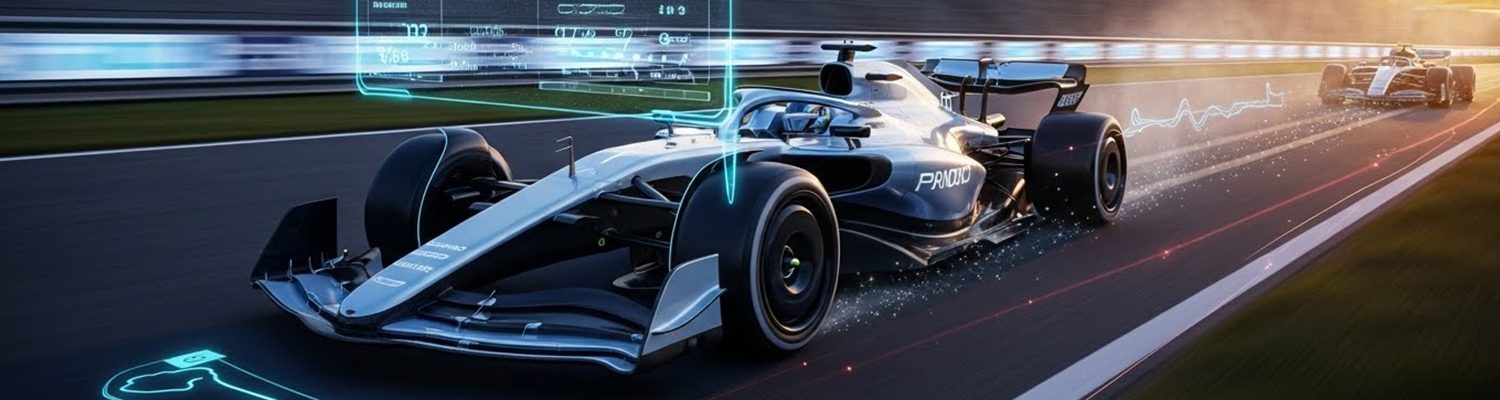
The integration of big data in F1 has transformed the way teams operate, enabling them to make informed decisions in real-time. Advanced telemetry systems allow engineers to monitor a car’s performance remotely and provide instant feedback to drivers. This connectivity is crucial for optimizing race strategies and improving car setups.
Furthermore, F1 teams are increasingly using predictive analytics to anticipate mechanical failures and adapt strategies accordingly, showcasing the transformative impact of data-driven decision-making in the sport.
Safety Innovations: Protecting Drivers
Safety has always been a paramount concern in F1, and technological advancements have significantly enhanced driver protection over the years. The introduction of the Halo device in 2018 marked a watershed moment in F1 safety. This protective structure, made of titanium, is designed to deflect debris away from the driver’s head, preventing potentially fatal injuries.
Other safety innovations include improvements in helmet and race suit technology, as well as stricter crash testing standards for cars. The FIA, the sport’s governing body, continuously updates safety regulations to incorporate the latest technological advancements. These measures have made F1 one of the safest forms of motorsport, despite its high-speed nature.
Simulators and Virtual Reality: The New Frontier
Simulators and virtual reality (VR) are becoming increasingly important in the preparation and development of F1 drivers and cars. Modern F1 teams use state-of-the-art simulators that replicate real-world driving conditions, allowing drivers to practice circuits and engineers to test car setups without the need for on-track testing.
These simulators are equipped with advanced VR technology that provides an immersive experience, helping drivers to refine their skills and adapt to different track conditions. The use of simulators has also proven invaluable during the off-season and in situations where track testing is limited due to regulatory constraints.
Moreover, simulators facilitate the development of young drivers by providing them with a platform to gain experience before stepping into a real F1 car. The role of simulator technology is expected to grow, with continuous improvements enhancing its realism and effectiveness.
Fan Engagement: Technology Bringing Fans Closer
Technology is not only transforming the cars and the competition but also how fans engage with F1. The sport has embraced digital platforms to provide fans with unprecedented access to live data, in-car footage, and interactive experiences. F1’s digital transformation is evident in the launch of F1 TV, an over-the-top (OTT) streaming service that offers comprehensive race coverage and exclusive content.
Social media channels and mobile apps have further enhanced fan engagement, enabling real-time interaction and content sharing. Augmented reality (AR) and virtual reality (VR) are also being explored to create immersive fan experiences, bringing them closer to the action than ever before.
The Future of F1: A Technological Odyssey
As F1 looks to the future, technology will continue to play a central role in shaping the sport. The upcoming 2026 power unit regulations, which focus on increasing the use of sustainable fuels and improving energy efficiency, highlight the sport’s commitment to innovation and environmental responsibility.
Additionally, the ongoing development of autonomous and connected vehicle technologies presents exciting possibilities for the future of F1. While the essence of the sport lies in human skill and competition, these technologies could lead to new forms of racing and entertainment.
In conclusion, the evolution of F1 racing is a testament to the relentless pursuit of technological excellence. From aerodynamics to hybrid power units, data analytics to virtual reality, F1 is at the forefront of innovation. As the sport continues to evolve, it promises to deliver even more thrilling and sustainable racing experiences for fans around the world.
Challenges and Considerations: Balancing Innovation and Regulation
As F1 continues to embrace technological advancements, it faces the ongoing challenge of balancing innovation with regulation. The governing body, FIA, plays a critical role in setting the rules that govern car design and performance. These regulations ensure a level playing field while also promoting safety and sustainability.
One of the challenges is managing the cost of technological development. The introduction of the budget cap in 2021 was a significant step towards ensuring that smaller teams can compete with financially stronger outfits. This cap limits the amount teams can spend on developing their cars, encouraging more efficient use of resources and enabling a more competitive field.
Another consideration is the environmental impact of the sport. While F1 has made strides in reducing its carbon footprint through hybrid technology and sustainable fuels, further efforts are needed to align with global environmental goals. Initiatives like the F1 net-zero carbon initiative aim to make the sport more environmentally responsible by 2030.
Technological Synergies: F1 and the Automotive Industry
The relationship between F1 and the automotive industry is symbiotic, with innovations in one sector often influencing the other. The transfer of technology from F1 to road cars is well-documented, with advancements such as energy recovery systems, lightweight materials, and aerodynamic designs benefiting consumer vehicles.
Automakers involved in F1, like Mercedes and Ferrari, leverage their racing expertise to enhance their consumer offerings, using F1 as a research and development platform. This collaboration not only advances automotive technology but also enhances brand prestige and consumer perception.
Moreover, F1’s emphasis on precision engineering and performance optimization provides valuable insights that are applicable to the broader automotive industry, particularly as it transitions towards electrification and autonomous driving.
Conclusion: The Road Ahead
In summary, the evolution of F1 racing is characterized by a relentless pursuit of technological advancement, driven by the quest for speed, efficiency, and sustainability. As the sport continues to innovate, it faces the dual challenge of maintaining competitive integrity while embracing new technologies that promise to redefine the future of motorsport.
The ongoing developments in aerodynamics, power units, data analytics, and safety measures are set to enhance the spectacle of F1 racing, offering fans more engaging and environmentally friendly experiences. As F1 navigates this dynamic landscape, the sport is poised to remain at the forefront of technological innovation, inspiring the next generation of automotive engineers and enthusiasts.
Ultimately, the future of F1 will be shaped by its ability to adapt and innovate, ensuring that it continues to captivate audiences worldwide while contributing to the broader automotive and environmental landscape.
The Role of Artificial Intelligence in F1
As F1 teams strive to gain a competitive edge, artificial intelligence (AI) is becoming an integral part of their strategy. AI technologies are used in various aspects of racing, from optimizing race strategies to enhancing car design and performance. Machine learning algorithms can analyze vast datasets to identify patterns and predict outcomes, providing teams with valuable insights that would be impossible to glean manually.
AI is employed in race simulations to predict the impact of different strategies, such as pit stop timings and tire choices, on race outcomes. This capability allows teams to make data-driven decisions that can be the difference between winning and losing. Additionally, AI-driven analytics help in understanding driver performance and areas for improvement, offering personalized training programs to enhance driver skills.
The future of AI in F1 looks promising, with potential applications including autonomous vehicle technologies that could be tested in controlled environments like F1 circuits. This intersection of AI and motorsport not only enhances the competitive aspect but also contributes to the broader development of autonomous driving technologies.
Innovative Materials: Building the Cars of Tomorrow
F1 cars are built using cutting-edge materials that prioritize strength, lightness, and durability. Carbon fiber composites are the cornerstone of F1 construction, offering a high strength-to-weight ratio that enables superior performance on the track. The use of these advanced materials ensures that the cars are both fast and safe, capable of withstanding the immense forces encountered during a race.
Recent advancements in material science have introduced graphene and other nanomaterials that promise even greater performance enhancements. These materials offer improved thermal and electrical conductivity, potentially leading to innovations in car aerodynamics and energy systems. The exploration of new materials is crucial for F1 teams looking to shave precious milliseconds off lap times while maintaining structural integrity and safety standards.
Fan Experience and Interactive Technologies
The technological evolution in F1 is not limited to the cars and drivers but extends to enhancing the fan experience. Interactive technologies, such as augmented reality (AR) and virtual reality (VR), are increasingly being used to bring fans closer to the action. These technologies offer immersive experiences, allowing fans to experience the thrill of racing from the comfort of their homes.
For instance, AR applications could provide real-time race data overlaid on live footage, offering fans a deeper understanding of the strategies and dynamics at play. Meanwhile, VR experiences can simulate the driver’s perspective, giving fans an unparalleled view of the race. The expansion of these technologies is set to revolutionize how fans engage with F1, creating a more interactive and engaging spectator experience.
Moreover, F1’s commitment to digital innovation is evident in its robust online presence and content offerings, catering to a global audience eager for behind-the-scenes insights and exclusive content. As digital platforms continue to evolve, F1 is poised to leverage these technologies to enhance fan engagement and expand its global reach.
The Collaborative Spirit: Partnerships in Innovation
The evolution of F1 is also driven by collaborations with technology partners and sponsors. Partnerships with leading tech companies provide F1 teams with access to the latest innovations and expertise. These collaborations enable the integration of cutting-edge technologies, such as advanced computing power for simulations and data analysis, into the sport.
For example, partnerships with telecommunications companies have enhanced connectivity during races, allowing for seamless data transmission and analysis. Similarly, collaborations with software companies have led to the development of sophisticated data analytics platforms that are crucial for strategic decision-making.
These partnerships are mutually beneficial, as they not only propel F1 teams to new heights but also showcase the capabilities of technology companies on a global stage. The collaborative spirit fosters innovation and ensures that F1 remains at the forefront of technological advancement.
Final Thoughts: Embracing a New Era
As F1 continues to evolve, it stands as a testament to the power of technology and innovation in shaping the future of sport. The integration of advanced technologies has transformed F1 into a high-tech arena, where every detail is meticulously engineered for optimal performance. This ongoing evolution promises to deliver more thrilling, sustainable, and engaging experiences for fans and participants alike.
The sport’s ability to adapt and embrace new technologies ensures that it remains relevant and exciting, capturing the imagination of audiences around the world. As F1 looks to the future, it will continue to be a driving force in the world of motorsport, setting benchmarks for performance and innovation that inspire the next generation.
About the Author