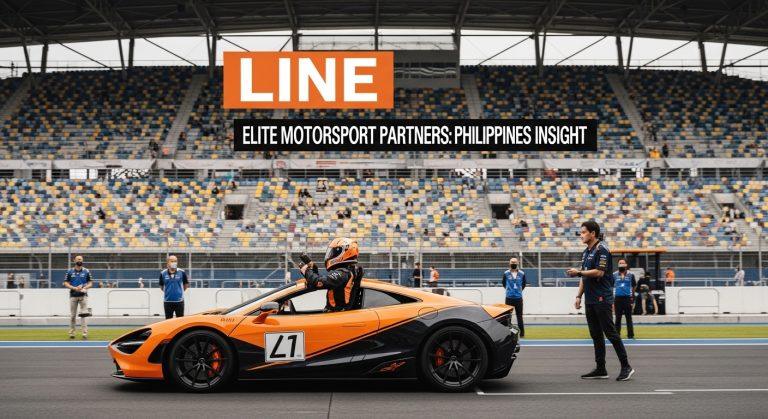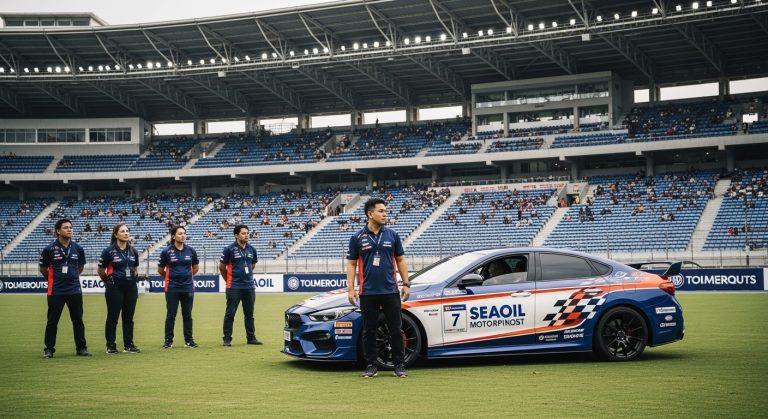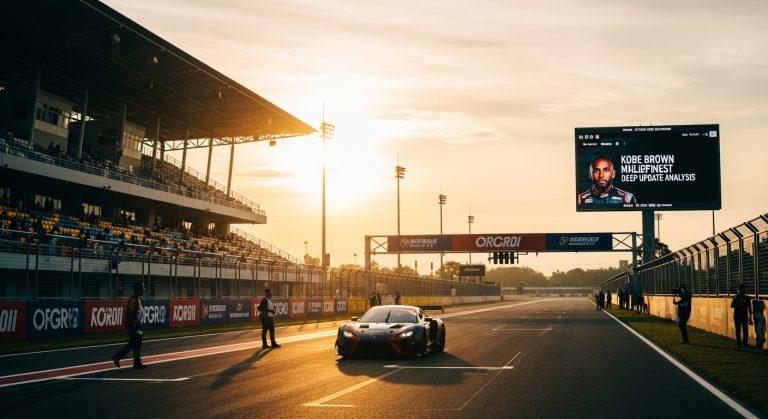
Racing cars on a Philippine track at dusk with palm trees in the background and a national motif on the pit wall.
Updated: April 8, 2026
motorsport Motorsport Philippines stands at a crossroads as the world of high-speed competition pivots toward new formats, amplified by digital engagement and evolving safety standards. For Philippine fans and local teams, the changes echo beyond Formula One’s latest era and into grassroots and regional series that promise more accessible development paths. This analysis places the Philippines within a wider motorsport ecosystem, exploring who wins, who loses, and what pragmatic steps can keep Philippine competitors competitive while sustaining fan interest.
A Moment of Transition: Global Racing and Local Echoes
Across the world, marquee series are recalibrating—the balance between showmanship, sustainability, and cost control is shifting. For the Philippines, this manifests as a push-pull between chasing international exposure and cultivating homegrown platforms that can translate global trends into tangible benefits. Local organizers are increasingly aligning with regional champions, tiered racing ladders, and media strategies designed to grow the sport at the grassroots level. The emergence of domestic events such as the Seaoil Radical Challenge illustrates a pathway where aspirant drivers migrate from karts and club racing to clearly defined, sponsor-friendly programs. While the scale differs from Formula One or the World Endurance Championship, the underlying dynamics—competition ladders, standardized safety protocols, and sponsor alignment—are the same: create a credible ecosystem that can feed talent upward and maintain fan interest downward.
In this context, global shifts have practical consequences for Philippine teams. Access to overseas events, international coaching, and exposure through online streaming can raise the profile of local talent, while at the same time raising expectations for equipment quality, data-driven tuning, and series organization. The challenge is not simply to imitate international formats, but to tailor them to the Philippine market—recognizing regional travel costs, media reach, and the realities of vehicle availability and maintenance in a tropical, archipelagic setting. The result could be a hybrid model where domestic series serve as talent farms and testing grounds for international ambitions, while international partners harvest a localized audience that translates into sponsorship and media value.
Economic and Infrastructure Implications in the Philippines
Racing infrastructure in the Philippines faces a mix of opportunities and constraints. Availability of suitable tracks, safety standards, and maintenance support dictates how far local teams can push technical development without outsourcing to foreign facilities. Yet the country’s market dynamics—robust family and community motorsport culture, a growing class of corporate sponsors seeking regional visibility, and a rising appetite for high-tech performance gear—create a fertile ground for scalable programs. A pragmatic approach emphasizes three pillars: affordable, repeatable race formats; a clear ladder that channels participants from karting to regional cars; and shared facilities that reduce per-entrant costs. As global stakeholders emphasize sustainability, the Philippines can align with cost-sharing models, energy-efficient vehicles, and data-driven race management. These steps do not require a sudden influx of luxury investments; rather, they align existing resources with a disciplined, long-term plan that lowers entry barriers while preserving competitive integrity.
Another important dimension is sponsorship strategy. Local and regional brands looking for tangible associations with sport, youth, and technology can leverage motorsport as a high-visibility platform without the expensive footprint of a top-tier global series. This requires evolving sponsorship packages, including data, hospitality, and media rights, into compact, sponsor-friendly bundles that can be offered to mid-market Philippine brands. In parallel, media ecosystems—live streams, short-form content, and highlight reels—must be tuned to Philippine audiences, leveraging mobile penetration and social platforms to maximize reach without incurring prohibitive production costs. The alignment of infrastructure, sponsorship, and media is not an afterthought; it is the core lever for sustaining a healthy motorsport pipeline in a cost-conscious market.
Strategic Pathways for Philippine Motorsport
The Philippines can advance its motorsport trajectory by pursuing several parallel tracks that reduce risk and build capability. First, formalize a national development ladder that clearly maps karting, junior formula, sports cars, and touring car formats to potential career outcomes. A transparent progression path not only attracts young talent but also makes sponsorship decisions easier for brands seeking ROI across multiple racing levels. Second, invest in regional partnerships that share resources—shared testing facilities, joint driver development programs, and cross-border coaching exchanges—so that local teams gain exposure without incurring prohibitive expenses. Third, empower grassroots organizations to standardize safety and event management, adopting internationally recognized norms while accommodating local realities. This combination of ladder, collaboration, and standardized governance can raise the quality of competition and increase the value of Philippine entries on regional and international stages. Finally, embrace technology as a force multiplier: data analytics for car setup, telemetry for driver development, and streaming strategies that expand the fan base beyond physical attendance. A practical policy mix would blend modest public or quasi-public funding with private sponsorship, ensuring a stable base while encouraging commercial participation.
Actionable Takeaways
- Establish a national motorsport blueprint that defines a clear driver development ladder from karting to touring cars, with standardized safety and governance across all sanctioned events.
- Promote affordable formats and shared facilities to reduce entry costs for teams, while offering tiered sponsorship packages aligned with measurable metrics (exposure, engagement, and fan reach).
- Invest in data-driven race management and driver development programs, leveraging local universities and tech firms for sensor and analytics support.
- Foster regional partnerships with neighboring Southeast Asian series to create a regional pipeline, maximizing travel efficiency and knowledge transfer for Filipino teams.
- Align media strategy with mobile-first consumption: regular live streams, short-form content, and accessible highlights to build a broad and engaged fan base.
- Advocate for policies that support sustainability in motorsport, including energy-efficient vehicle technologies and re-use/recycling programs for components where feasible.
Source Context
For readers seeking broader context on global racing shifts and regional development, the following sources provide background on industry evolution and upcoming national events.